How to spot a good repair without knowing anything about bodywork
You do not need training to inspect a finished panel. You need daylight, an angle, and to know what you are looking at.
September 7, 2026 · 3 min read
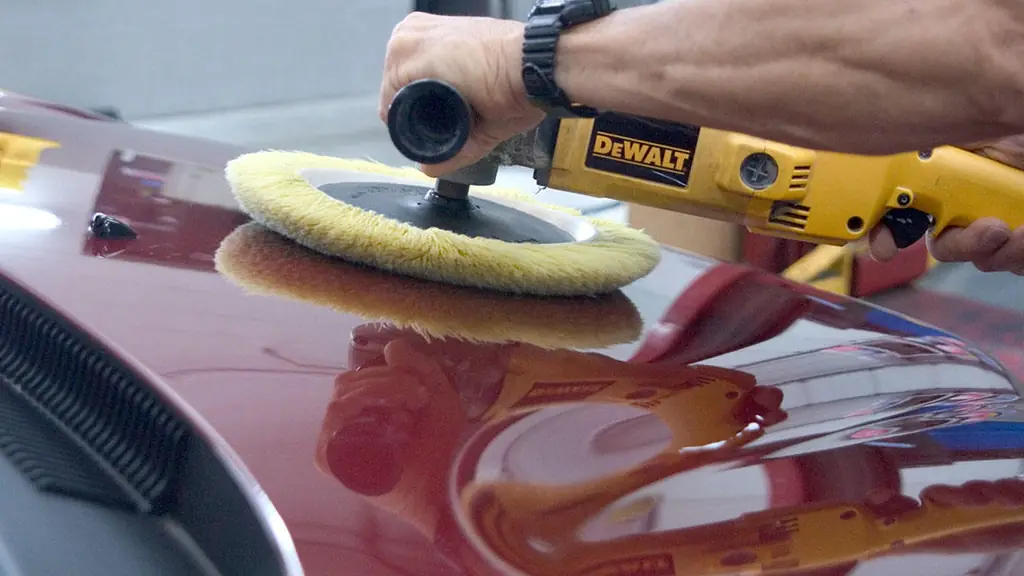
When a repaired vehicle is handed back, most people do the same thing: walk up to the damaged area, look straight at it, decide it looks fine, and drive away. Looking straight at a panel is the one angle almost guaranteed to tell you nothing.
Everything worth seeing on a finished repair shows up obliquely, in reflections and in the lines where two panels meet. Here are four checks that need no tools and no knowledge of bodywork, and that a shop confident in its work will be glad you made.
One: follow the body line
Every vehicle has body lines, the creases pressed into its panels that catch light and run along its length. Stand at one end, crouch a little, and look down the side of the car so that the line runs away from you.
That highlight should run unbroken and straight. If it kinks, steps, or wanders where the repair was, the panel was brought back close but not finished. This is the single most revealing thing you can do, and it takes about five seconds once you know to do it.
Two: read the reflection
Find something with a hard edge nearby, a building, a fence, the edge of the shop roof, and watch its reflection travel across the repaired panel as you walk slowly past.
On a properly finished clear coat the reflected edge stays sharp and holds its shape. On a surface that is not truly flat it ripples, stretches, or goes soft in patches. Paint does not hide a surface, it reveals it, and gloss magnifies whatever is underneath.
This is the same test a technician is making with a polisher in hand. When you can see the tool clearly mirrored in the paint, the clear is level and there is no texture sitting in it.
Three: check the gaps
Where two panels meet there is a gap, and that gap is a deliberate measurement rather than an accident. Look at the gap around the repaired area, then compare it to the same gap on the other side of the vehicle.
- The gap should be even along its whole length, not tapering wider at one end.
- It should be about the same width as the matching gap on the opposite side.
- The two panels either side of it should sit flush, with neither standing proud of the other.
- Doors, hood and trunk should close with the same effort they always did.
A gap that tapers usually means something behind the panel is still out of position. That is a structural observation, made without any equipment at all, and it is exactly why fit is checked before anything gets polished.
Four: look at the panel next door
Colour is easier to judge by comparison than in isolation. Stand back far enough to see the repaired panel and the ones beside it at the same time, in daylight rather than under shop lighting, and move your head.
A good refinish does not jump out as the newer panel from any angle. Paint moves over time with sun and washing, so a match made against a paint code alone can be noticeably off on a car that has spent a few years outdoors. Matching against the vehicle as it is now, and blending into the neighbouring panels where the match needs help, is what stops the repair announcing itself.
What to do if something looks wrong
Say so, there and then, while the vehicle is still at the shop. Point at what you are seeing and describe it in ordinary words: this line goes crooked here, this gap is wider at the top, this panel looks redder than that one.
You do not need the correct terminology to raise a legitimate observation, and a shop that stands behind its work would rather hear it now than have you notice it in a supermarket car park in a fortnight. Our repairs are backed for as long as you own the vehicle, which only means anything if people feel able to come back.
These four checks are also worth doing before you buy a used car. A repair that was rushed years ago is still visible to anyone who knows to crouch down and look along the light.
Community Collision Center, (936) 560-1610
Call (936) 560-1610More articles
Your insurer named a shop. What your options actually are.
The suggestion often arrives sounding like an instruction. It is worth knowing the difference before the vehicle goes anywhere.
After hail: when a dent can be fixed without touching the paint
A hood full of dents sounds like a repaint. Often it is the opposite: the one case where the original paint should stay exactly where it is.